


Age is an inevitable part of life that comes to us all. As we go through life, our bodies and minds experience changes that can be both positive and negative. It is never too late to start taking care of yourself, no matter what your age. By making positive lifestyle changes and embracing the aging process, you can live a happy and fulfilling life at any age.
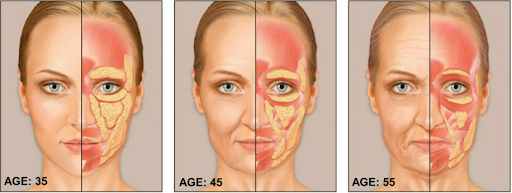

All of these fat pads are diminishing and changing position. This leads to the shadowing and the sagging that we experience as we age.
Facial aging is an intricate process that involves changes to the skin, muscle, fat, and underlying facial skeleton.

HOW DO FAT PADS CHANGE AS WE AGE?
Over time the facial fat pads in the upper and mid face atrophy (waste away), while those in the lower face tend to become fuller (hypertrophy).
As deeper fat pads decrease with age (for example deep in the cheeks) this reduces their support of the superficial fat pads, which can then begin to sag.
The fat pads also become more discernible as separate ‘pockets’ of fat, rather than blending in with the overall shape of your face (as they do when you’re young).
WHY DOES THE CHANGE IN FAT PADS CAUSE US TO LOOK OLDER?
As the fat pads diminish and sag, it causes the upper and middle parts of our face to lose structure and fullness, while the lower part gets a heavier appearance.
Where the fat pads are depleted the skin can sag, look hollow and wrinkle due to the lost fullness. Where the fat accumulates, the skin can lose its elasticity.
Noticeable effects of this can include:
Eyebrows and eyelids droop.
Wrinkles and lines become more obvious due to the loss of fat to plump them out.
As volume is lost below the eyes, undereye “palebral bags” can appear (which were previously hidden under the superficial fat pads).
Temples and cheeks become hollowed (accentuating the appearance of the underlying bone structure).
The tip of the nose may droop.
Nasolabial folds become deeper.
Lips straighten or downturn and gain ‘marionette’ lines.
The jawline sags and becomes less defined.
Jowls form and can lead to a “turkey neck” appearance.


In the diagram you can see how the eye socket is bigger and the nose holes are bigger and the cheekbones have changed angles and the jaw has become much smaller shorter and less wide.

The black shadow shows most common places for bone lose
Over the age of 35, the number of bone regenerating cells in the face decreases. Gradually, the bone around our eyes widens, leading to eye hollows and flattened cheeks. Then, the bones of the central face and jaw degrade while rotating back and downwards. Together, these changes result in a diminished bone scaffold on which our fat and skin sit. Our tissues become too large for their underlying bones, and wrinkles and folds become more evident. we grow into these soft tissues and proportions idealize in our 20s. Then, as we begin to lose bone in the next decade, the smile lines deepen and jowls gradually return.
So how do we address facial bone loss?
As we age our bones shrink and the entire skull is getting smaller.
We have loss of bone in the orbital rim which gets bigger.
The opening to the nose gets bigger which adds to the deepening into the nasolabial fold.
The cheekbone recedes backward so we get a drop of the cheek.
The bone where the teeth are connected diminishes as well.
The mandible (the jawbone) gets smaller both in length on the side as well as the thickness from front to back.
All of the bone loss contributes to the sagging of the tissues that hang down.

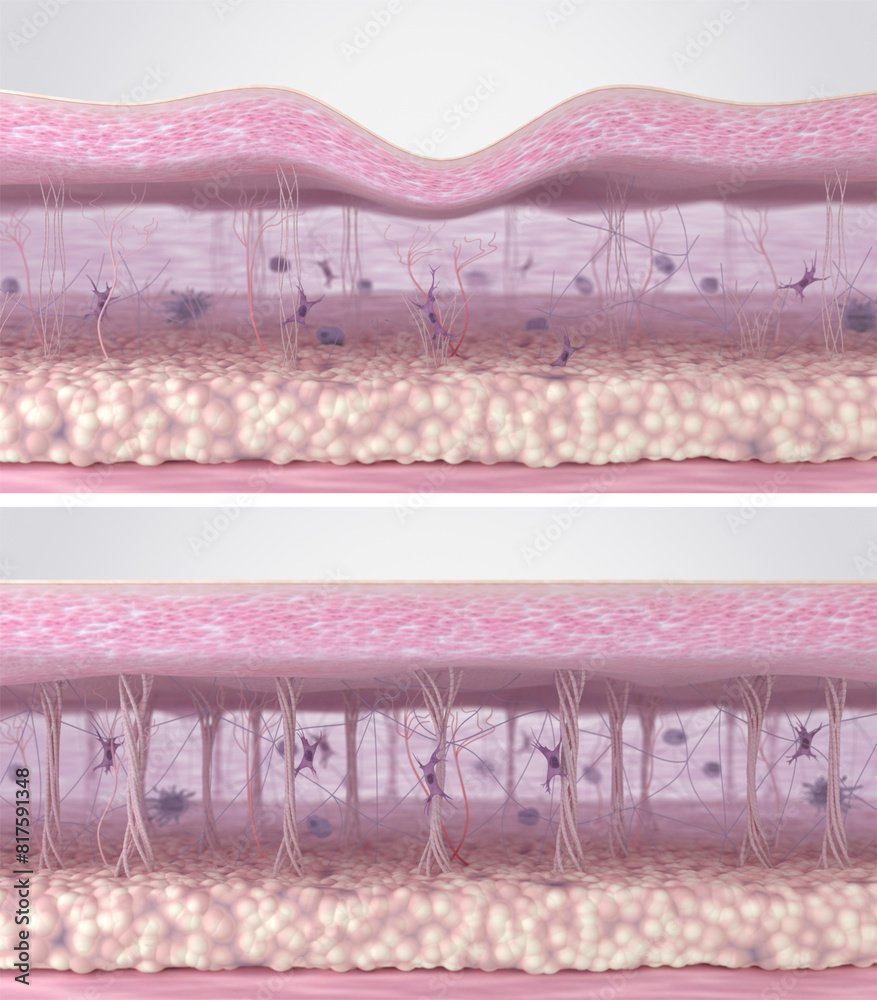

What is collagen?
Collagen is a strong, fibrous protein that is found throughout our bodies, including our bones, muscles and tendons. It is also found in the middle layer of the skin.1Under a microscope, collagen looks like bands of rope bound together, or stacked logs.
What does collagen do in the skin?
Collagen acts as our skin’s support structure or scaffolding that helps maintain the shape of the skin. In fact, a large part of our skin is composed of collagen.
What does collagen do to our looks?
A healthy supply of collagen gives us a youthful-looking complexion. This is why there is so much focus on collagen in the aesthetics world and why collagen is considered key for skin renewal.
When we age, what happens with the natural collagen in our skin?
As we age, our body’s natural collagen production decreases. The cells in our body that produce collagen, called fibroblasts, are no longer able to produce it as efficiently as they once did, and existing collagen becomes fragmented, bent and frayed.
As the skin ages the natural collagen loss leads to thin skin and structurally weakened skin. Other typical signs that collagen loss can have in the aging face are sagging skin and loose skin.
Collagen production doesn’t only decline due to aging. Collagen loss can also happen as a result of exposure to the sun’s ultraviolet (UV) radiation. In fact, studies show there can be a significant loss of collagen in chronically sun damaged skin, so it is important to reduce sun exposure and wear sunscreen whenever you are in the sun.
Also, smoking is related to premature aging of the skin. One reason why is that cigarette smoke impairs your skin’s collagen production and can trigger the destruction of existing collagen in the skin.
Furthermore, there is scientific evidence on the role of diet in skin aging, particularly when it comes to sugar and its effects on collagen. When we eat sugary foods, sugar molecules attach to collagen fibers in the skin and break them down through a process called glycation. This ultimately leads to a loss of the collagen’s strength and flexibility and is also known as “sugar sag.”
In other words, the starting point of a skin renewal program, or if you are considering a skin renewal regimen, could be to take a closer look at your lifestyle and habits and, if necessary, make appropriate changes.
Our body begins to lose collagen when you turn 30. The effects become noticeable after several years. In our 40s, as we head into perimenopause and menopause, the skin quickly loses collagen. Studies show that women’s skin loses about 30% of its collagen during the first five years of menopause. After that, the decline is more gradual. Women then lose about 2% of their collagen ever year for the next 20 years.
The loss of collagen affects the way you look and feel. The first signs may be subtle. However, the earlier you start, the more you can do to replenish the collagen in your body to see positive results.

Loss of Natural Fullness
Cheeks become flatter while the under-eye area develops hollows. Unless you’ve lost a lot of weight recently, these are probably signs of collagen loss.
Sagging Skin
Since collagen powers skin elasticity, as it starts decreasing so does the firmness of your skin. You may notice the sagging effect on your jawline, cheeks, buttocks, and stomach. Wrinkles and Fine Lines Since the loss of collagen leads to the dehydration and thinning of the skin, wrinkles and fine lines begin to appear.
Lifeless Hair
Hair begins to thin and stops looking as healthy as it did before. You may also notice hair loss. As the amount of collagen starts decreasing, hair could begin to split and break.
Replenishing Collagen in Your Body
As the body starts losing collagen, and adverse effects begin to become bothersome, people look for ways to replenish this highly important protein. Several methods exist today.
Taking Supplements
Supplements are one of the most popular ways to increase collagen levels. Some studies show that they may improve the elasticity and appearance of your skin. It’s also worth noting that you can only enjoy the benefits while you are taking supplements. As soon as you stop supplying your body with collagen, effects may disappear.
Adjusting Your Diet
To produce collagen, your body needs nutrients from protein-rich food as well as vitamin C, zinc, and copper.
Have regular treatments that help boost collagen
We’ve a selection of facials, Microneedling and skin boosters that help boost collagen production. Improving the skin’s tone, texture, and elasticity by counteracting the effects collagen loss, leaving your skin feeling refreshed and looking brighter. Incorporating regular facials can improve the way your skin looks and feels and helps boost collagen production.

Look After Your Skin
Look After Your Skin
What is hyaluronic acid?
Hyaluronic acid plays a crucial role in the skin's moisture levels.
Hyaluronic acid is a polysaccharide molecule (a big and complex carbohydrate) also known as hyaluronan. It’s formed by our cells and occurs naturally in our bodies. Along with collagen and elastin, it’s one of the main components of the connective tissue that surrounds our skin cells where it provides moisture and firmness to skin.
Young, healthy skin contains lots of hyaluronic acid but, as we age, our skin produces less, and existing reserves deplete.
What does hyaluronic acid do?
As we age our skin produces less hyaluronic acid, leaving our skin more dry and less plump.
Hyaluronic acid is a powerful humectant which means that it acts like a magnet, attracting water to skin. It can bind between 1,000 and 10,000 times its own weight in water (i.e. one gram binds between one and ten litres).
Maintaining optimal hydration is key to healthy skin: without the right amount of water skin dries out and is less effective as a protective barrier. Visually, it loses radiance and firmness.
As skin ages, our cells produce less hyaluronic acid and existing hyaluronic acid starts to degrade. This can lead to age-induced dryness and is also one of the factors responsible for the visible signs of skin ageing such as fine lines and wrinkles, a loss of volume and a loss of elasticity.

Benefits Of Hyaluronic Acid
Hydrates Skin
Helps Heal Wounds
Smooths Skin Texture
Anti-Aging
Reduces Dermatitis
Helps Fine Lines
Plumps Skin
Skin Rejuvenation
-
Several treatments, both non-invasive and surgical, can help restore facial volume. Here are some of the most popular methods:
1. Dermal Fillers (Hyaluronic Acid Fillers)
- How it works: Fillers lcontain hyaluronic acid, a substance naturally found in the skin. They add volume, smooth out wrinkles, and enhance facial contours.
- Areas targeted: Cheeks, nasolabial folds, marionette lines, temples, under-eye hollows.
- Longevity: Typically lasts 6 to 18 months depending on the product used.
- Benefits: Non-invasive with minimal downtime.
2. Fat Transfer (Fat Grafting)
- How it works: Fat is harvested from other parts of the body (usually the abdomen or thighs), purified, and injected into areas of the face with volume loss.
- Areas targeted: Cheeks, temples, nasolabial folds, and under-eye area.
- Longevity: Can be semi-permanent, as some of the fat will reabsorb, but the remaining fat can last for years.
- Benefits: Uses your own body tissue, making it more natural, and can have longer-lasting results.
3. Sculptra (Poly-L-Lactic Acid Fillers)
- How it works: Stimulates collagen production over time, gradually adding volume and improving skin texture.
- Areas targeted: Cheeks, temples, and chin.
- Longevity: Results appear gradually and can last up to two years.
- Benefits: Subtle, natural-looking results with long-lasting effects.
4. Collagen-Stimulating Fillers (Plenhage)
- How it works: Contains calcium salmon dna, which provides rejuvenation while stimulating collagen production for longer-term effects.
- Areas targeted: Jawline, cheeks, and hands (also used for non-facial areas).
- Longevity: Results last up to 12-18 months.
- Benefits: Long-term skin improvement.
6. Non-Surgical Skin Tightening (HIFU)
- How it works: Uses ultrasound (Ultherapy) or radiofrequency (Thermage) energy to stimulate collagen production and tighten the skin.
- Areas targeted: Face, neck, and décolletage.
- Longevity: Results can last up to 12-24 months, with gradual improvements.
- Benefits: Non-invasive with little to no downtime.
### 7. Microneedling with PRP (Platelet-Rich Plasma)
- How it works: Microneedling creates tiny injuries in the skin to stimulate collagen production. PRP, derived from your own blood, is applied to enhance healing and volume restoration.
- Areas targeted: Face, especially fine lines, wrinkles, and volume loss in the cheeks and under-eye areas.
- Longevity: Results last 6 months to a year with repeated treatments.
- Benefits: Natural, non-surgical approach to boost collagen.
### 8. Facelift Surgery (Rhytidectomy)
- How it works: A surgical procedure to lift and tighten the deeper layers of the face, repositioning the skin and underlying tissue to reduce sagging and restore youthful contours.
- Areas targeted: Entire face, including the cheeks, jawline, and neck.
- Longevity: Results can last 10-15 years.
- Benefits: Provides dramatic and long-lasting results.
### 9. Facial Implants
- How it works: Solid silicone or other materials are surgically implanted in the face to restore lost volume and enhance contours, often in the chin or cheekbones.
- Areas targeted: Cheeks, jawline, chin.
- Longevity: Permanent results.
- Benefits: Provides structural enhancement for individuals with significant volume loss.
### 10. Lifestyle Modifications
- Hydration: Keeping your skin hydrated can help plump it up and reduce the appearance of fine lines.
- Healthy Diet: Foods rich in antioxidants and vitamins (such as Vitamin C and E) support skin health.
- Sun Protection: Wearing sunscreen daily helps prevent further collagen breakdown due to UV exposure.
- Skincare Regimen: Using topical treatments like retinoids or peptides to promote collagen and elastin production can slow volume loss.
A combination of treatments may be recommended
-
Jowls, the sagging or drooping skin along the jawline, develop as a result of aging, genetics, lifestyle factors, and changes in the structure of the skin and underlying tissues. Some people are more prone to developing jowls than others due to several key factors:
1. Aging Process
- Collagen and Elastin Breakdown: As people age, the skin loses its two key components—collagen (which provides structure) and elastin (which allows skin to stretch and snap back). This leads to sagging as the skin becomes less firm and elastic.
- Fat Redistribution: The fat pads in the face, particularly in the cheeks, diminish or shift downward, causing the skin to sag around the jawline.
- Muscle Weakening: The muscles that support facial skin also weaken over time, making it more difficult for the skin to maintain its structure.
2. Genetics
- Inherited Traits: Some individuals are genetically predisposed to developing jowls. People with a family history of sagging skin or certain facial shapes (such as a naturally round face or weaker jawline) may notice jowls forming earlier or more prominently.
- Bone Structure: Individuals with less defined or receding jawlines may notice jowls more easily, as there is less structural support for the skin and underlying tissue in the lower face.
3. Lifestyle Factors
- Sun Exposure: UV radiation from the sun breaks down collagen and elastin in the skin, accelerating the aging process and contributing to sagging skin, including jowls.
- Smoking: Smoking reduces blood flow to the skin, speeding up collagen breakdown and reducing skin elasticity, which can lead to premature sagging and the formation of jowls.
- Weight Fluctuations: Significant weight loss or repeated cycles of weight gain and loss can stretch the skin, making it less resilient. When the skin doesn't "snap back" as easily, it may start to sag around the jawline.
- Poor Skincare: Not moisturizing, failing to use sunscreen, or neglecting skincare routines that stimulate collagen can contribute to skin aging and the appearance of jowls.
4. Gravity
- Over time, the effects of gravity cause skin and underlying tissues to sag. As the skin ages and loses elasticity, it becomes more vulnerable to the downward pull of gravity, resulting in jowls.
5. Facial Expressions and Posture
- Repeated Movements: Habitual facial movements and expressions can contribute to the development of jowls. For example, repetitive squinting or frowning might exacerbate skin sagging in certain areas.
- Poor Posture: Constantly looking down (such as when using phones or computers) can weaken neck muscles and contribute to sagging skin under the jawline, making jowls more prominent over time.
Some people undergo cosmetic treatments like Botox, dermal fillers, skin tightening procedures, or facelifts to prevent or reduce the formation of jowls. These interventions can lift sagging skin, stimulate collagen production, or maintain facial volume, reducing the appearance of jowls.
The development of jowls is influenced by a combination of natural aging, genetics, and lifestyle, with some individuals predisposed to seeing them earlier or more prominently than others. Proactive skin care, a healthy lifestyle, and, in some cases, cosmetic interventions can help prevent or delay the appearance of jowls.
-
Starting with Botox early as a preventative measure against aging skin can be a strategic way to maintain a youthful appearance and delay the development of deeper wrinkles. Here are several reasons why starting Botox in your late 20s or early 30s, before wrinkles fully form, can help prevent aging skin:
1. Prevents Wrinkles from Forming
- Dynamic Wrinkles: These are wrinkles that form due to repeated facial movements like frowning, squinting, or raising eyebrows. Botox works by temporarily relaxing the muscles that cause these movements, preventing the skin from folding and creating deep lines over time.
- Prevention vs. Correction: When started early, Botox can stop dynamic wrinkles from forming or becoming more pronounced, reducing the need for more aggressive treatments later. Once wrinkles become static (permanent), they are harder to treat, so prevention is key.
2. Delays the Need for More Invasive Procedures
- Starting Botox early can delay the need for more invasive cosmetic procedures like facelifts or deep resurfacing treatments. By preventing wrinkles from becoming deeply etched into the skin, you can maintain a smoother appearance for longer.
- Less Product Needed Over Time: Preventative Botox often requires smaller doses because the muscles haven’t yet fully developed the habit of creating wrinkles. This means that maintaining youthful skin may be less costly and invasive in the long term.
3. Trains Your Facial Muscles
- Muscle Conditioning: Early use of Botox can "train" your facial muscles to make fewer wrinkle-causing movements. Over time, even without Botox, you may naturally move those muscles less, reducing the formation of lines.
- Habits: People who get Botox early often notice they adopt better habits (e.g., less squinting, frowning) due to muscle relaxation, making wrinkles less likely to form.
4. Non-Invasive and Minimal Downtime
- Quick and Easy: Botox is a non-invasive procedure that typically takes just a few minutes, with minimal discomfort and downtime. You can return to your regular activities immediately, making it an attractive option for busy lifestyles.
- Safe: Botox is FDA-approved and has been widely used for decades. When administered by a qualified professional, it is considered very safe with few side effects.
5. Subtle and Natural-Looking Results
- Starting Botox early tends to produce subtle, natural-looking results. Since you are using it as a preventative treatment, it doesn't alter your appearance dramatically. Instead, it softens facial expressions and smooths the skin over time, giving you a more refreshed look without looking "frozen" or overdone.
- Customizable: Botox can be tailored to individual needs. A skilled injector can focus on specific areas like the forehead, crow’s feet, or frown lines, allowing for a precise and natural look.
6. Boosts Collagen Production
- While Botox primarily works by reducing muscle movement, it can indirectly support collagen production. When the skin isn't constantly folding and creasing, the collagen breakdown slows, and your skin stays smoother and firmer longer.
7. Enhances Confidence
- By preventing the early signs of aging, Botox can help you maintain your youthful appearance and boost your confidence. Many people find that starting Botox early keeps them looking fresher and feeling more confident as they age.
8. Slows Down Skin Aging Process
- Cumulative Effect: Botox treatments, when done consistently, can slow the progression of wrinkles, keeping your skin looking smoother for longer. Even when the effects wear off (typically in 3-6 months), the muscles are still somewhat relaxed, and the skin hasn’t formed as many lines.
- Skin Quality: In addition to smoothing out dynamic wrinkles, preventing deep creases helps maintain the overall quality of your skin as you age.
9. Works Well with Other Preventative Skincare
- Combination Approach: Botox can be part of a broader anti-aging routine that includes good skincare practices (like sunscreen, retinoids, and moisturizers). When used together, these treatments can significantly delay the visible signs of aging.
- Synergy with Other Treatments: Botox can be combined with other non-invasive treatments such as dermal fillers, microneedling, or chemical peels to address volume loss, texture issues, and pigmentation for comprehensive anti-aging results.
10. Reversible and Temporary
- Botox is not permanent, which means if you ever decide to stop using it, your muscles and skin will gradually return to their natural state. This gives you flexibility in how you manage your anti-aging routine.
Ideal Areas for Preventative Botox
- Forehead Lines: Horizontal lines that appear when you raise your eyebrows.
- Glabellar Lines (Frown Lines): The "11" lines between your eyebrows that appear when you frown or concentrate.
- Crow’s Feet: Fine lines around the outer corners of the eyes, especially noticeable when squinting or smiling.
When to Start Botox for Prevention
Many experts suggest that people in their late 20s or early 30s are ideal candidates for preventative Botox. However, this varies based on individual factors like genetics, skin type, and lifestyle. If you’re noticing early signs of dynamic wrinkles when your face is at rest, it may be time to consider starting Botox.
In conclusion, starting Botox early can help you prevent the formation of deep wrinkles, prolong youthful skin, and maintain a natural, refreshed appearance over time, delaying the need for more invasive procedures.